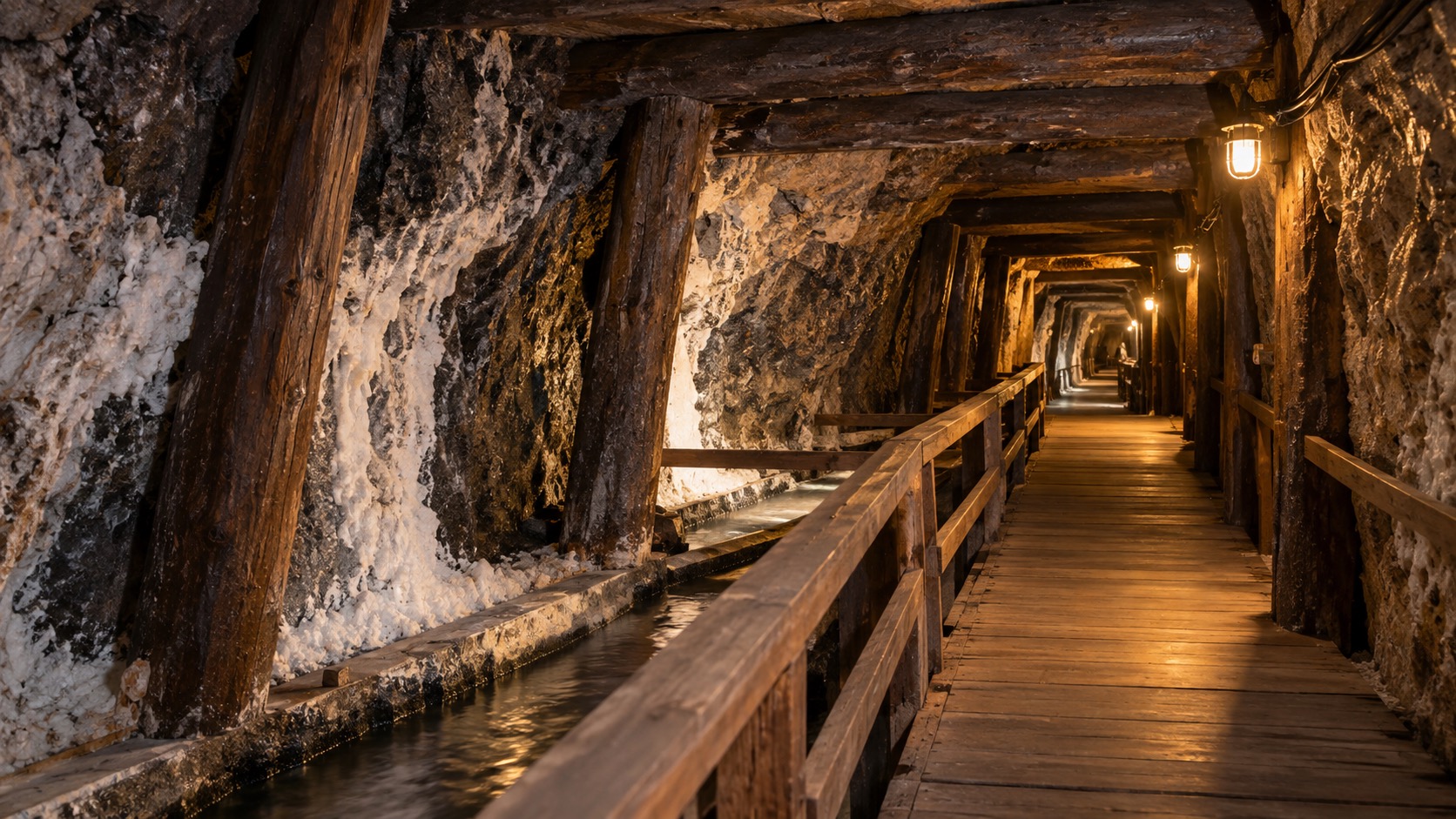
The salt mine
A 90-minute guided tour, two slide chutes, and a funicular ride to get there. This is the actual reason Hallstatt exists.
Read the mine guide →Hallstatt looks like a postcard of a lakeside village. It's also the site of the world's oldest known salt mine, still-standing wooden stairs from 1344 BCE, and the archaeological dig that gave an entire Iron Age its name. This guide covers what's actually underground, what's on the surface, and how to see both without getting swallowed by the crowds.
Most day-trippers see the lakefront and leave. The salt mine, the ossuary, and the archaeology sit on different parts of the same small hillside and each needs its own hour.
A 90-minute guided tour, two slide chutes, and a funicular ride to get there. This is the actual reason Hallstatt exists.
Read the mine guide →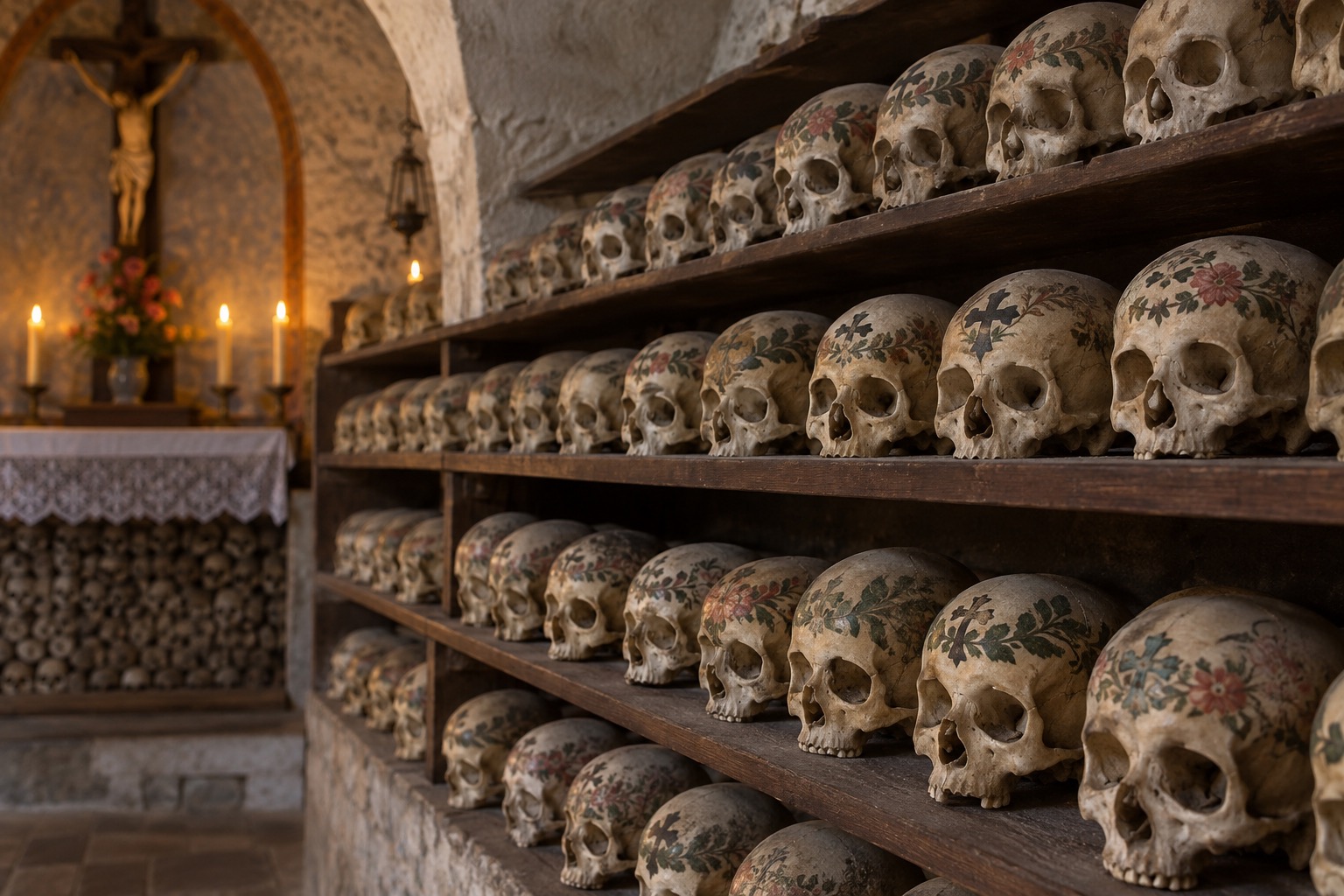
Over 600 hand-painted skulls in a chapel basement — the practical result of a cemetery with nowhere left to grow.
See the Beinhaus →
737 people, one main square, and a lake road so narrow it closes to cars on the busiest days.
Explore the village →Hallstatt's fame — helped by a 2006 South Korean TV drama and a full-scale replica built in Guangdong, China in 2012 — turned a small mining village into one of Austria's most photographed places. Local authorities now cap incoming tour buses at 54 a day, with priority given to groups staying overnight.
Tell it how you're staying and roughly when you're going. It answers using the real bus-cap and crowd-pattern facts above — not a generic "go early" tip.
—
Choose your options to see a real recommendation.
Over 1,300 excavated graves and the reason "Hallstatt Period" is a real term in every European history textbook.
Read the history →Where the postcard shot actually comes from, and what it's like to stand there with everyone else trying to get it too.
See the viewpoint guide →Train to Hallstatt-Obertraun, then the lake ferry — the only sane way in during peak months.
Plan the journey →