Archaeologists call it "the Hallstatt Period" for a reason.
When European archaeologists needed a name for the early Iron Age culture spanning much of Central Europe, they named it after this specific valley — because the graves excavated here were that important.
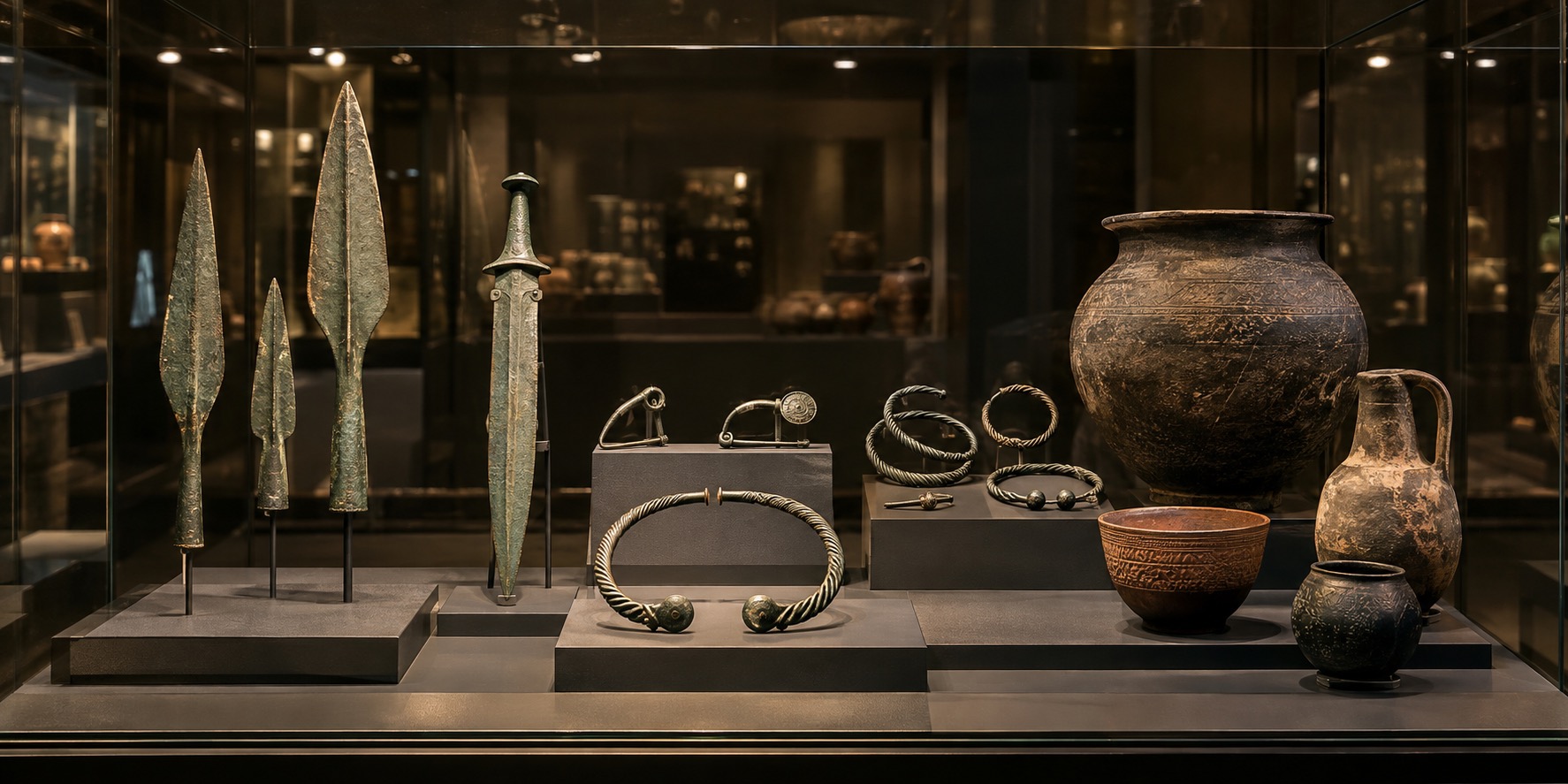
What was actually found here
Starting in 1846, mine official Johann Georg Ramsauer began systematically excavating a prehistoric cemetery near the salt mine. Over the following decades, more than 1,300 graves were uncovered — an enormous sample size for the period, and one made unusually rich by the site's connection to salt. Grave goods included bronze and iron weapons, jewelry, pottery, and — because salt miners themselves were sometimes preserved by the same brine that preserves food — organic material that almost never survives three thousand years in the ground anywhere else.
Why it defined a whole era's name
The sheer scale and quality of the Hallstatt finds gave archaeologists a detailed enough picture of material culture — weapon styles, burial customs, metalworking technique — that "Hallstatt Period" became the standard term for the broader Central European early Iron Age, roughly 800 to 400 BCE, across textbooks and museum labels well beyond Austria.
Timeline
- ~5000 BCEFirst evidence of salt extraction in the Hallstatt high valley.
- 1344 BCEThe wooden mine staircase later found inside the Salzberg is built.
- 800–400 BCEThe graves that define the "Hallstatt Period" are laid.
- 1846Johann Georg Ramsauer begins systematic excavation of the cemetery.
- 1997Hallstatt-Dachstein / Salzkammergut Cultural Landscape inscribed as a UNESCO World Heritage Site.
Seeing the finds today
Much of the original excavated material now sits in Vienna's Natural History Museum, though Hallstatt's own local museum holds a meaningful collection and gives useful context for anyone visiting the mine and the burial ground's original location. Treat the mine tour and the archaeology as two sides of the same story rather than separate attractions — the graves exist because of the salt, and the salt is why anything survived at all.